


"Just slow down."
That sounds like good advice. But it's also nearly impossible to follow when everything is late, and all of it feels urgent.
It's tempting to go looking for something new when you feel this way: a new app, a new system, a book that finally explains what you're missing.
But you probably don't need a new revelation. What you need is some space so you can see things clearly.
A lack of clarity is not an information problem. It's usually an overwhelm problem.
Turns out, your brain is actually really good at making sense of things. It just can't keep up if you never get out of the busyness of your day-to-day.
Which is why I'm such a big proponent of Personal Retreats.
What Is a Personal Retreat?
A Personal Retreat is a full day of thinking time, away from home and by yourself, to get clear on where you are, where you want to go, and what you want to focus on for the next 90 days.
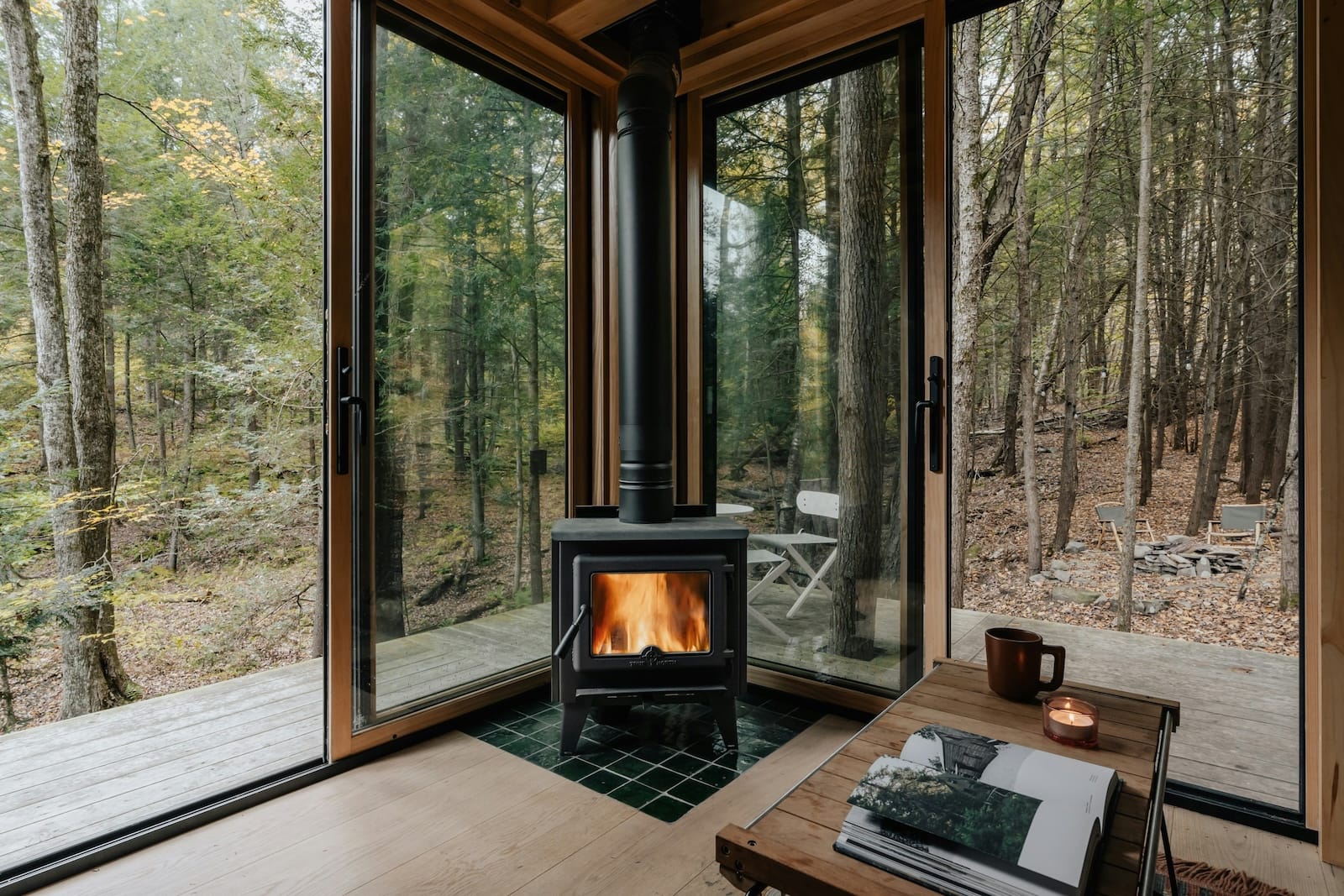
The quarterly Personal Retreat review and planning process has 8 steps:
- Vision & Values - Reconnect with your mission and core values so every decision gets filtered through them.
- Journal Review - Read back through the last 90 days to see what actually happened.
- Ideal Future - Describe a typical day in your life five years from now.
- Wheel of Life - Rate your current satisfaction with each area of your life.
- Retrospective, Part 1 - Consider what happened in the last 90 days
- Retrospective, Part 2 - Brainstorm the changes you might make for the next 90 days
- Set Intentions - Pick one goal for the next 90 days.
- Plan Your Perfect Week - Block time on your calendar for taking consistent action.
The whole Personal Retreat process takes about 8 hours, and you'll walk away with two big things: 1) the motivation you need to take consistent action on what matters, and 2) the clarity to cut what doesn't so you can focus on what does.
At the heart of the Personal Retreat are 3 critical questions:
- What should I START doing?
- What should I STOP doing?
- What should I KEEP doing?
They're simple on purpose. They give you enough structure to create momentum, but they leave room for flexibility and creativity in your answers.
Here's how they work.
Question 1: What Should I START Doing?
This question helps you see the opportunities that are already around you.
The key is to anchor it to your ideal future. You don't want to start things that aren't aligned with your vision and values. That's not progress. That's just getting busier.
So list the things that would move you toward the future you described. Then you can figure out how to do them consistently.
This is the exciting question for me, because I love starting new projects.
But you can't just keep starting things. Even when the opportunities are good ones, you eventually hit a point where you simply can't do anything else.
Which is why the next question is so important.
Question 2: What Should I STOP Doing?
Of the 3 questions, this is the most important one for me.
Without picking something to stop doing, you won't have the capacity to sustain anything new. Your time and attention are finite. If you keep adding without ever subtracting, eventually the whole thing comes crashing down.
I look at everything I'm currently committed to and ask: if this opportunity were presented to me today, would I say yes? If the answer is no, it goes on the chopping block.
Then every quarter I pick at least one thing to stop doing. It creates the space to say yes to new opportunities without being overwhelmed.
This is hard for me. I'm a recovering people pleaser, and when I say I'm going to do something, I don't want to let anyone down.
But things change. I've changed. And just because something was right in the past doesn't mean it's right anymore.
Question 3: What Should I KEEP Doing?
These are the things that are currently moving the needle for me.
It's easy to skip this question, because these are things you're already doing. But identifying them helps infuse new motivation into them. You stop doing them on autopilot and start doing them on purpose.
This question also works as a filter. If something is taking a considerable amount of my time and I can't find a reason to keep doing it, the question changes: should this be on my stop list instead?
Give the Questions the Time They Need
On my Personal Retreats, I always spend 2 full hours considering these 3 questions.
That sounds like way too much, but it's not. What happens every single time is that about 30 to 40 minutes in, you'll have a few items under each question, and your brain will tell you you're done.
Keep going.
Our brains are conditioned to complete the task and move on, so sitting with a question after it feels answered is uncomfortable. But that discomfort is where things start to get interesting. Somewhere around the 90-minute mark, you run out of obvious answers, and your brain starts considering things you never would have otherwise.
At every retreat I've done, the items that ended up mattering most came from the last 30 minutes.
That's where the real life-changing stuff happens. Let me give you an example.
How a Personal Retreat Helped Me Quit My Job
A couple of years ago, I was away on a Personal Retreat, and as I was considering these 3 questions, I had a crazy idea:
Maybe I should quit my job?
At the time, I was the Integrator at a digital marketing agency. And honestly, I wasn't unhappy with my job. But agency life didn't really line up with the vision I had of my ideal future, and I recognized that I had been playing it safe for a long time.
My oldest son was 16 at the time and starting to think about what he wanted to do after high school, and I realized that I needed to model what it looked like to bet on myself.
It was uncomfortable to think about, but once I started considering it, I couldn't stop thinking about it. My wife and I did a version of fear setting (writing out the worst that could happen) when I got back and realized that if it didn't work out, I could always find another job, and the more I considered the possibility, the more committed to the idea I became.
So a month later, I turned in my notice. And I've been working as an independent creator ever since.
But I never would have gotten there if I didn't spend that time on my Personal Retreat asking those 3 questions.
The Bottom Line: You Don't Have to Quit Your Job for These Questions to Change Your Life
Your moment of clarity may be a lot less drastic than mine. Maybe it's ending a commitment you said yes to years ago, or a project you're no longer excited about.
You probably already know what belongs on your stop list. You just haven't given yourself the space to write it down.
So here's my challenge: do a Personal Retreat. Pick a day in the next 30 days, get away by yourself, and give these 3 questions the time they need. Then come back and pick at least one thing to stop doing.
If you want some help, I just finished a brand new version of my Personal Retreat course that walks you through the whole thing. It includes:
- 14 short videos (about 2 hours total) that walk you through the complete 8-step process
- An online tool you can use to complete your full Personal Retreat
- A digital planner for reMarkable, Supernote, or GoodNotes
- My Personal Retreat template file so you can do your whole Personal Retreat in Obsidian if you want
- A real example retreat, start to finish, so you can see the whole thing in action
Right now, you can get all of it for the special intro price of $29 (regularly $49).
👉🏼 Get the Personal Retreat Handbook for $29
But with or without the course, I encourage you to make the space and ask the questions. A Personal Retreat won't magically give you more time, but it will show you how to make the most of the time you do have.


